Lighting setup is important in any video production; in this article, we will discuss various lighting styles.
Rembrandt Lighting
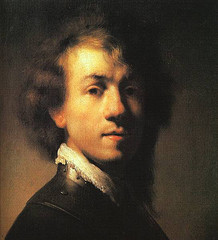
Rembrandt lighting is a lighting technique used primarily for studio portrait photography. It is characterized by a small illuminated triangle beneath the subject’s eye on the less illuminated side of the face. The technique is named after the Dutch painter Rembrandt, who often used this type of lighting when painting his subjects.
You can find some examples of images using the Rembrandt lighting technique by clicking on the image below:

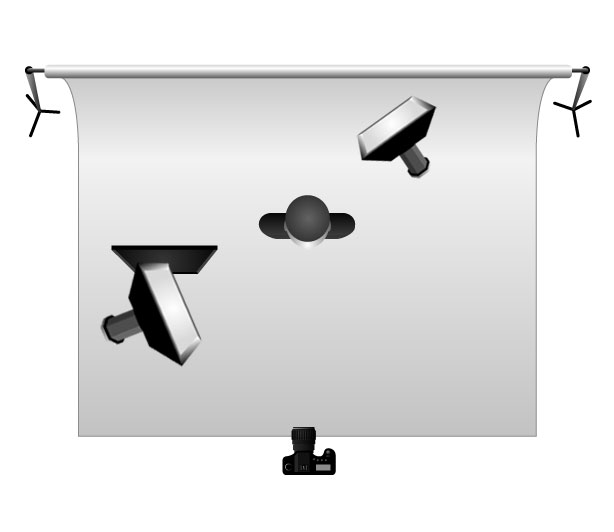
Here is a diagram showing the lighting setup used to achieve Rembrandt lighting.
Butterfly Lighting (Paramount Lighting)
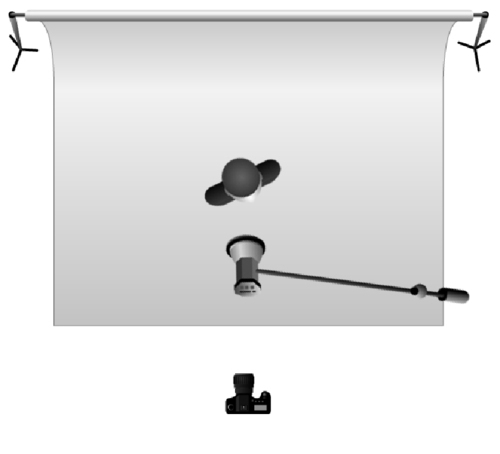
Butterfly lighting, also known as Paramount lighting, is characterized by the butterfly-shaped shadow cast beneath the nose. This lighting pattern can be very effective for a variety of face shapes, but it works particularly well with subjects who have slim faces and prominent cheekbones. It is created by positioning the light source above the subject’s face, typically at an angle of 25 to 70 degrees.

Here is a Butterfly lighting setup:
Loop Lighting
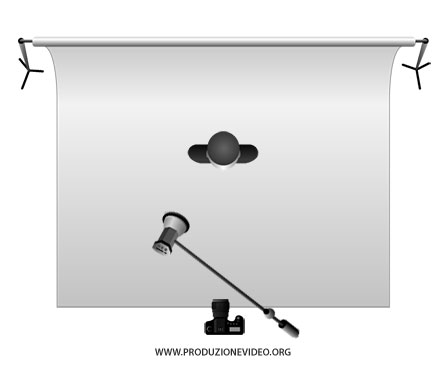
Loop lighting gets its name from the loop-shaped shadow that forms beneath the subject’s nose. It is one of the most commonly used lighting techniques because it is considered suitable for illuminating most face shapes while creating a sense of depth. It is achieved by positioning the main light source above the subject’s face (typically at an angle of 25 to 60 degrees) and slightly to the right or left of the direction the face is pointing (typically at an angle of 20 to 50 degrees).
Clicking on the image below will allow you to view examples of Loop lighting portraits found through Google Images:

Here is a Loop Lighting setup:
Split Lighting
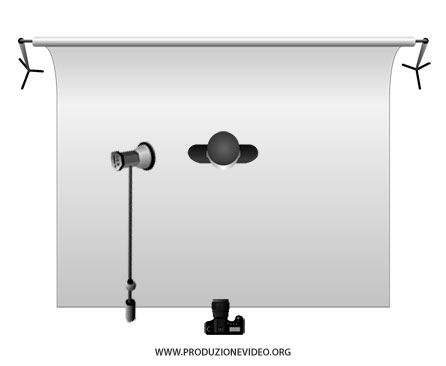
Split lighting is a lighting technique in which the face is divided into two halves, with one side illuminated and the other in shadow. It is achieved by positioning the light source to the right or left of the subject (typically at an angle of 90 to 120 degrees), with the light placed slightly above the subject.
By clicking on the image, you can find some examples of split lighting:

Below is a diagram showing the lighting setup for the Split Light technique in relation to the subject:
Broad Lighting
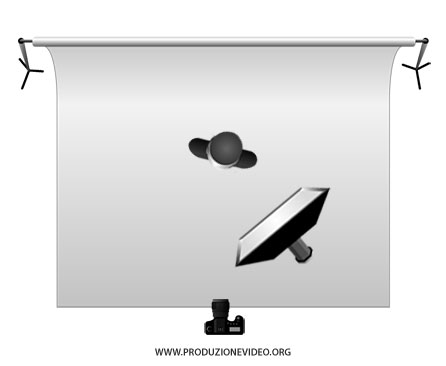
Broad lighting refers to a lighting technique in which the subject’s face is turned slightly away from the camera, with the more illuminated side of the face facing the camera. This creates a large area of light across the face, leaving a smaller area in shadow. Broad lighting is widely used in portrait photography. The name comes from the fact that this technique makes the subject’s face appear wider and can be used effectively for subjects with very narrow faces. However, it is not suitable for naturally round faces.
Below are some examples of the broad light technique:

Below is a diagram of the lighting setup for the Broad Light technique:
Lighting setups in video production
One-light lighting setups: A softbox is positioned at different angles, using a secondary reflector to redirect the light.
Light distance: The distance between the softbox and the subject, as well as the size of the light source, affects the softness of the shadows. The larger and closer the light source, the softer the light and shadows.
Two-light lighting setups: Two light sources can be used to illuminate the subject and the background simultaneously.
Rim lighting: The second light is positioned behind the subject to separate them from the background. The stronger this light is, the more pronounced the effect will be.
Three-light lighting setups: The classic setup uses three light sources arranged as follows: a front or side key light, a rim light, and a background light.
Fashion lighting: This video briefly explains the basic principles of photographic lighting using a mannequin. One example is fashion lighting, achieved by illuminating the subject using butterfly lighting and lighting the background with two spotlights aimed at two reflectors.
Video
Interesting videos about various lighting styles.
In this video, you can see a creative use of lighting, where the combination of different colors produces an original result:
Link
Here are some links to guides discussing lighting techniques:
- http://youtu.be/7n2C-Hs-9Bk
- http://www.youtube.com/watch?v=gmmZECtP3oM&feature=endscreen&NR=1
- http://blog.lindsayadlerphotography.com/intro-to-studio-lighting-diagrams
- http://www.portraitlighting.net/patternsb.htm
- http://digital-photography-school.com/6-portrait-lighting-patterns-every-photographer-should-know